
The Milwaukee Brewers are going back to the World Series for the first time in 42 years.
In other words, many people reading this weren’t even alive the last time the Brewers were in the Fall Classic.
Oh, and the Brewers were a part of the American League then, as they hadn’t yet made the switch to the NL.
The Brewers have never won the World Series — one of five current MLB teams who can make that rather ignominious claim.
That’s setting up this fall’s World Series as a historic moment in the MLB playoffs — as the Brewers will be squaring off against either the Tampa Bay Rays (who have also never won it all) or the Cleveland Guardians (who currently hold the longest active championship drought in MLB at 77 years).
The playoffs often serve as an important teaching tool for the other MLB teams that are sitting at home, watching from their couch. This year is no different, especially from the Cubs‘ perspective.
Here are three lessons Jed Hoyer and the Cubs can take from the postseason:
1. Using the whole field
There are many paths to take to score runs in today’s game — something the Brewers and Cubs both proved during the 2026 season.
The Cubs led baseball with 850 runs scored in the regular season and the Brewers were not far behind in second (832 runs).
The Cubs accomplished that feat with a lot of slug, hammering the third-most homers in the league (220) while also drawing the most walks.
The Brewers also walked a lot (second-most in MLB), but only one team in baseball hit fewer homers than the Milwaukee squad (154).
[MORE: The most painful part of the Cubs early playoff exit]
While the rest of baseball is zigging, the Brewers have zagged. They use the whole field more than any other team in the league, as 26.5% of their batted balls have gone to the opposite field. That has led to the lowest pull rate in MLB (35.9%).
The Cubs, meanwhile, pulled the ball at the fourth-highest clip in the league (43.7%) and ranked near the bottom of the league (25th) in percentage of batted balls hit to the opposite field.
Now, there is a pretty clear reason for that — power and slug typically come from pulling the ball. And the Cubs had plenty of power in 2026, while that was not the Brewers’ strong suit.
So, in some ways, the Brewers simply deserve credit for maximizing what their roster does best. But it also led to the best record in the league and, now, a trip to the World Series.
That said, the Brewers just earned a spot in the World Classic by going against the grain and their “small ball” approach in the NLCS:
Again, that proves there are many different ways to score runs in today’s game.
And it’s a fact the Cubs need to keep in mind. They were not one-dimensional on offense by any means in 2026. But they were more reliant upon homers, slug and pulling the ball than on using the whole field or coming through with runners in scoring position.
The Cubs ranked 20th in MLB with a .243 AVG with runners in scoring position while the Brewers were 2nd at .276. (The Rays, by the way, led baseball with a .284 AVG with runners in scoring position, and they could wind up opposing the Brewers in the World Series.)
This is where going to the opposite field can come into play:
None of this relates to the Cubs’ offense in the playoffs. They scored just 1 run in the Wild Card Series against the Padres, but that’s the way it goes sometimes. It’s hard to hit in the postseason (the Dodgers’ billion-dollar lineup can certainly attest to this) and it’s even harder to hit in an environment where each game and each at-bat carries such weight and importance.
The best cure for the Cubs’ offense in the playoffs is simply to stop playing best-of-three Wild Card Series and instead secure a first-round bye and begin a postseason run in the NLDS.
Which means winning the division…
2. The importance of a bullpen
We have already seen over the last decade or so how important bullpens are in the MLB playoffs.
This year seems to underscore that point as much as any other.
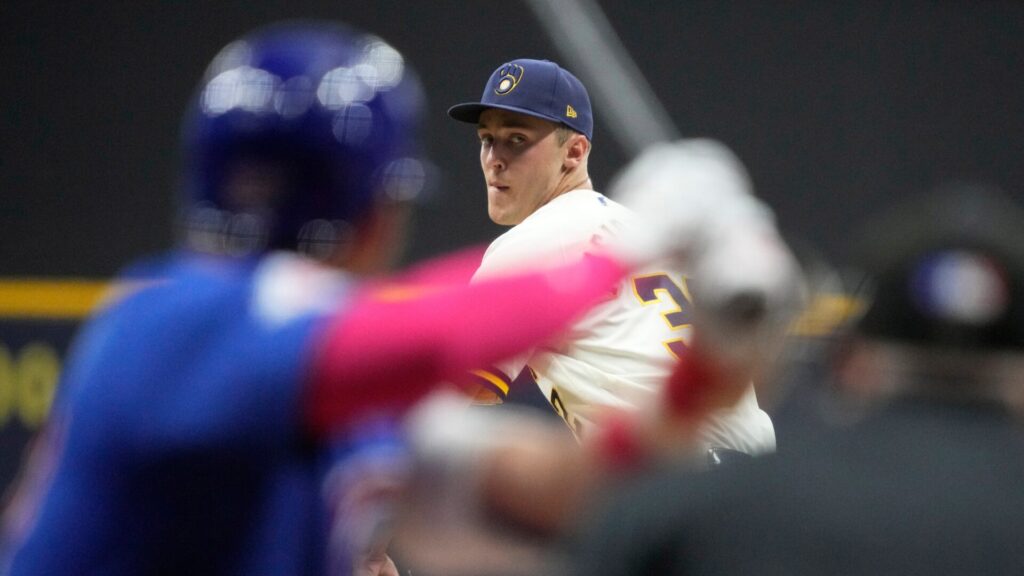
The Brewers have a stellar rotation led by the NL Cy Young (Jacob Misiorowski) and another incredibly talented young hurler (Logan Henderson), yet they still leaned on their bullpen to carry them to the World Series.
The White Sox came a win away from the ALCS essentially without using traditional starters. Teams are going to their bullpen as early as ever — and it’s working.
Look at every team in the LCS — each manager had four or five really good (or even elite) options to turn to out of the bullpen.
Craig Counsell had no such luxury even in the Wild Card Series.
Hoyer’s front office certainly made an effort to build a strong bullpen in 2026, but injuries and ineffectiveness led to that unit being a clear weakness entering the postseason. The Cubs headed to San Diego for that series with maybe two truly trusted options in the bullpen (Daniel Palencia, Ryan Zeferjahn) and each of those guys had experienced struggles as recently as early September.
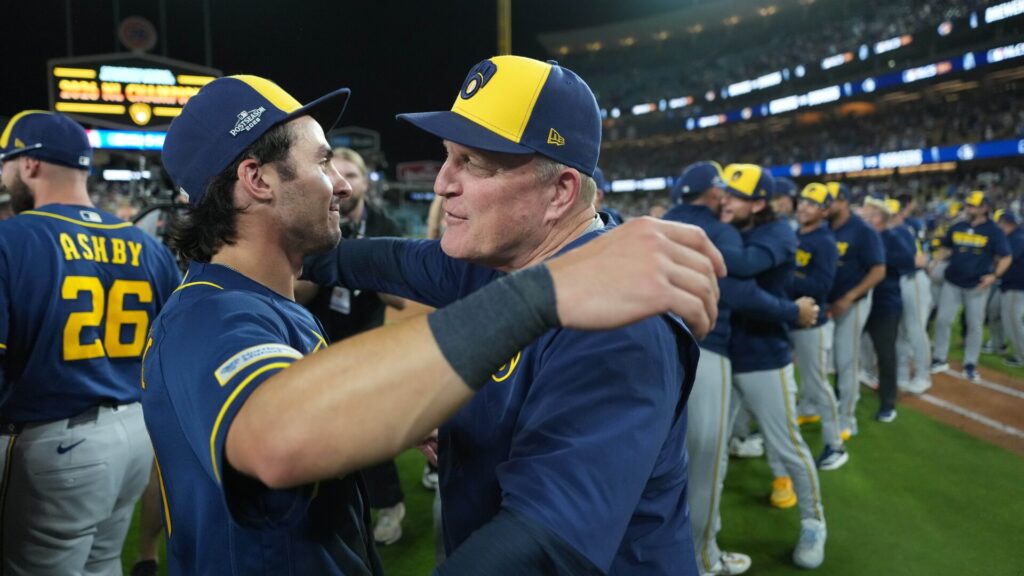
Throughout this entire season, we didn’t see anybody come out of the bullpen looking as dominant as an Aaron Ashby or Cade Smith or Bryan Baker.
In today’s game, bullpens take center stage in the playoffs.
The Cubs undoubtedly knew that going into this postseason, but the last few weeks have highlighted it and made it a clear point of emphasis this offseason.
The Cubs need to find a way to build a strong bullpen next season if they have hopes of taking home another World Series trophy — or even making a deep postseason run.
3. Homegrown pitching is paramount
Following the 2023 season, the Cubs went out and scooped up Counsell from the Brewers and made him the highest-paid manager in the game.
What’s happened since then is certainly not what Counsell or the Cubs had hoped.
The Cubs have finished second in the division in each of the last three years — a combined 29 games behind the Brewers. And Counsell’s replacement and former bench coach, Pat Murphy, is about to win his third straight Manager of the Year Award.
“They’ve had the best record in baseball the last two years,” Hoyer said at his end-of-season presser. “They’ve had an exceptional two seasons and there’s no denying that. I think both having them in our division and having the best record in baseball and being in the National League, the standard has to be exceptionally high.”
Why?
What’s behind the large gap that still exists between the Cubs and Brewers?
There are a lot of things (including the offensive point above), but one main area sticks out: Pitching development.
The Brewers develop pitching at an elite level. The Cubs don’t.
That’s it right there.
“The area from a major-league standpoint is their pitching has been exceptionally good,” Hoyer said. “That’s the area that we have to double down and really focus on. Obviously the position playing group this year was exceptional and I think that’s the biggest area we have to focus on.
“The focus has to be on all areas. Trying to pinpoint any one area, I don’t think that’s what it is. I think that would be oversimplifying a really complicated thing. But I think we have to be willing to look at all aspects of our pitching operation to figure out, how do we get the pitching part to the level our pitching group is? Because it’s not there right now.”
The Cubs faced a series of unfortunate circumstances in 2026 with a nearly unbelievable rash of pitching injuries (especially early in the season). And the organization simply could not keep up.
It’s not as if the Cubs came into the season unprepared for the attrition. Hoyer and Co. traded a top prospect (Owen Caissie) to the Marlins for a controllable starter who many around the game thought would take a leap forward (Edward Cabrera). They brought back Shota Imanaga and remade their bullpen, including handing out the first multi-year deal to a reliever (Phil Maton) since Craig Kimbrel in 2019.
As we all know now, it didn’t work. Cabrera struggled mightily and landed on the IL three times, Justin Steele never returned and a host of others — including Cade Horton and Ben Brown — got injured and never made it back.
And the Cubs had to then go out and part with more valuable resources (namely top young players like Jefferson Rojas and Moises Ballesteros) to acquire more pitching at the deadline just for a push into the playoffs. And because of the shortened series, one of the guys they acquired for Rojas (Clay Holmes) never even appeared in the postseason for the Cubs.
That’s all because the Cubs have struggled to develop these “waves” of pitching they had hoped to have coming through the farm system.
There have been some success stories, sure. Brown, Assad, Steele, Horton are all recent examples of players who have taken the next step with the Cubs whether they were drafted by the organization or not.
But the Cubs cannot state that they have the same level of success with pitching development as any of the four teams in the LCS — namely the Brewers and Guardians. These are two of the best teams in baseball at consistently churning out quality pitchers and navigating the inevitable run of injuries on a staff.
It’s a concern moving forward, as well.
Horton won’t be back until midseason next year at best. Brown’s long-term status is a question mark given the troublesome neck injury. Cabrera is under contract, but he just endured the worst year of his career despite pitching in front of one of the best defenses we’ve seen in modern baseball history.
In the farm system, the only true pitcher knocking at the door of the big leagues is Jaxon Wiggins — and he comes with plenty of question marks both on the injury front and whether he can be an effective starter or will be resigned to a relief role.
As Hoyer’s comments state, the Cubs clearly knew this was a weakness of the organization even before the MLB playoffs kicked into high gear. But it’s become a central focus of each team’s successful run this fall — and the Cubs will be tasked with finding a solution to the pitching development problem this winter.