
For the second straight season, Cubs fans got a taste of October baseball.
For one whole minute…
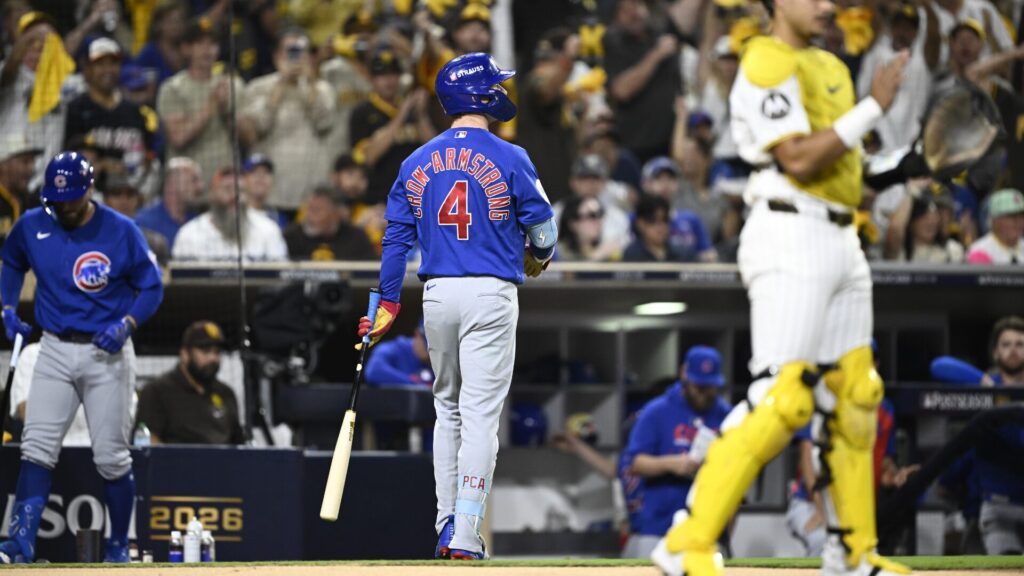
The team that led baseball in runs scored and posted the best defense in the league watched as the San Diego Padres celebrated on the Pecto Park infield after Carson Kelly grounded out to end Game 2 of the NL Wild Card Series at 12:01 a.m. CT on Oct. 1.
The way the first postseason series fell, the games were held on the final two days of September. And the way they played, the Cubs season was over before October even entered its second minute.
It was a tough end to what was a special season in a lot of ways. The Cubs had 13 walk-off wins and watched as Pete Crow-Armstrong put up one of the greatest seasons this game has ever seen.
The Cubs rattled off two separate 10-game winning streaks and had the third-best run differential in MLB.
Yet the team faded down the stretch.
The Cubs entered the final week of the regular season in the driver’s seat for the top Wild Card spot and the right to host the best-of-three series at Wrigley Field — a place that was truly magical a year ago in the playoffs.
But the Cubs dropped four out of five games to begin that final week and watched as the Padres vaulted past them in the Wild Card standings.
That meant the series shifted to San Diego, where Padres fans created a raucous environment for the hottest team in baseball entering the playoffs (the Padres and Brewers tied for the best record in MLB in September).
The Cubs were outscored 12-1 in the series and put up only eight hits (just one of which was of the extra-base variety).
“It just feels like we let something slip away,” president of baseball operations Jed Hoyer said Friday afternoon at his end-of-season press conference. “That’s probably the hardest thing. These fans deserve home playoff games. We let homefield slip away by playing poorly in September, especially the last week.
“And then we let a chance to go deep in the playoffs and really get this team playing in the postseason slip away by playing poorly in San Diego. That’s the emotion or sentiment I have as I sit here today.
“It feels like we let an opportunity slip away that we won’t get back. We have to work really hard to get back to that place. I think losses like this are really motivating. But in the moment right now, I feel for the fans who supported this team so much because I feel like they deserved a long run this year and we let it slip away.”
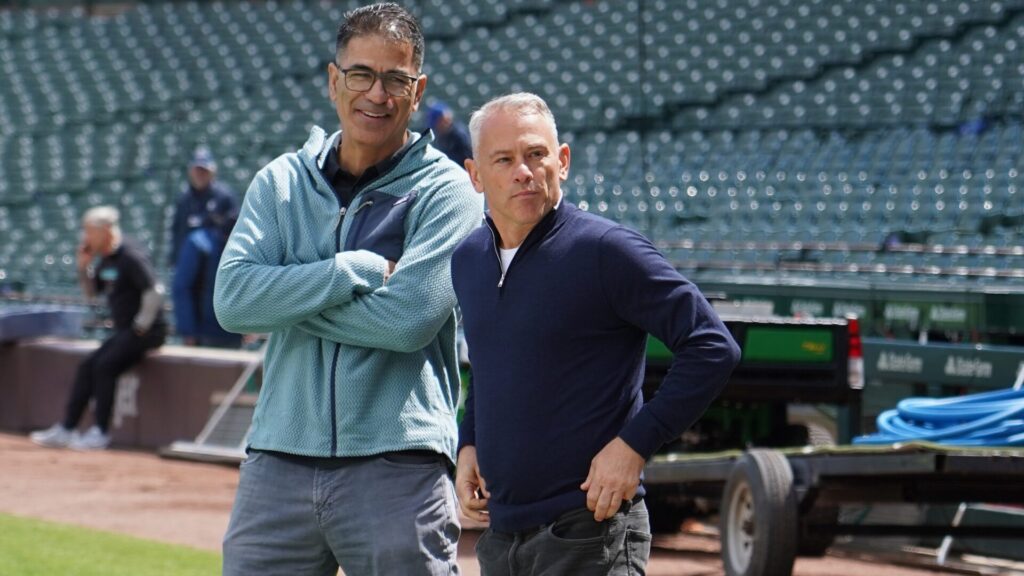
Hoyer’s assessment is honest and accurate — the Cubs had every opportunity to secure their playoff position in the final six games of the regular season.
But should it even come to that?
The Cubs finished 14 games behind the Brewers in the NL Central, meaning Milwaukee got to sit at home for a week to rest up and reset their pitching staff ahead of a home game Saturday in the NLDS.
The Cubs have not had the opportunity to skip a round because the delta between them and the Brewers in the division is so vast.
It’s not just 2026, either. The Cubs finished five games behind the Brewers last year and 10 games behind their northern rivals in 2024. That’s a total of 29 games over the last three seasons.
Which means the Cubs are left fighting for a wild card spot — and playing in a series that could be decided by randomness as much as anything. The winner of each wild card series isn’t necessarily the better team on the whole — it is simply the team that played better for two games.
To be clear — the Cubs decidedly did not play well in the two games in San Diego. Or in the week before the Wild Card series, when they controlled their own destiny.
The Cubs averaged 1.8 runs per game against the Marlins and Red Sox before scoring 6 runs on the final day (in a game that ultimately didn’t mean anything for the standings).
“We didn’t hit — I think it’s as simple as that,” Hoyer said. “Our offense was really good for most of the summer. We had a bad stretch in May for a while. But otherwise, the offense was really good.
“… We just didn’t score. Certainly not for lack of effort, lack of caring, lack of preparation. To a man, the guys have come into the exit meetings and letting homefield advantage slip away — they knew how much it meant to last year’s series against the Padres and they saw how much it meant to this year’s series.”
The Cubs led baseball in runs scored, wRC+, OPS, slugging percentage and walks in the regular season. They also boasted the best defense by a wide margin across essentially any metric.
But the offense disappeared at the wrong time and the defense can’t be much of a factor when the Padres hit four home runs.
The Cubs had to navigate through a crazy series of pitching injuries during the year, including season-ending elbow surgery for budding homegrown ace Cade Horton after just two starts. Justin Steele also experienced a setback in his own recovery from an elbow injury and this year’s breakout star on the pitching staff, Ben Brown, didn’t throw a single pitch after June 19 due to a troublesome neck injury.
The story was the same in the bullpen, where Opening Day closer Daniel Palencia was limited to just 32 games and the team’s top two offseason additions — Phil Maton and Hunter Harvey — combined for only 31.2 innings and an ERA over 6.00 when they were on the mound.
That led Hoyer and the Cubs to be aggressive at the trade deadline in augmenting the pitching staff, dealing multiple young pieces (including catcher/DH Moises Ballesteros and No. 2 prospect Jefferson Rojas) for starters Kevin Gausman and Clay Holmes as well as reliever Ryan Zeferjahn.
Gausman was injured in the final week of the season and limited to just 10 outs in Game 2 of the Wild Card Series. Zeferjahn recorded the final four outs Wednesday night and Holmes didn’t appear at all, though he was warming in the bullpen in Game 2.
“We put resources into this team because we believed in this team,” Hoyer said. “It’s kind of simple as that. There were long stretches where we looked like we could be a dominant team. As a result, I give the Ricketts family and Tom a lot of credit — we pushed, in part because of the injuries we had during the year.
“We had to take on a lot of payroll to survive and take on those guys and the family was incredibly willing to do that. We traded prospects away to supplement this group at the deadline and we did that because we believed in them. We believed in this group.
“We had the best player in baseball. We had an exceptional position playing group. We believed in this group and we fell short. We let that opportunity slip away. I think that’s the part that will gnaw at us for a long time.”