© 2026 ALLCITY Network Inc.
All rights reserved.

Hello, hello!
I’m sending you this from my hotel room down in Dallas at the East-West Shrine Bowl! Excited to get draft season underway with this trip, which I enjoy as a back-to-back. I head to Mobile for the Senior Bowl first thing on Monday morning, but I’ve got six practices to take in beforehand.
Before we start, I invite you to subscribe to this NFL Draft newsletter. It’s free and it’ll pop up in your inbox every Friday morning as you get read for the upcoming NFL Draft in April!

OK, onto the newsletter!
On the ALL NFL Draft Podcast this week, I went through players that I am most excited to see up close here at the Shrine Bowl and picked the brain of Eric Galko, the director of the event. I also have a piece up right now with a quick position-by-position preview of what I expect to see down here, so be sure to check those out!
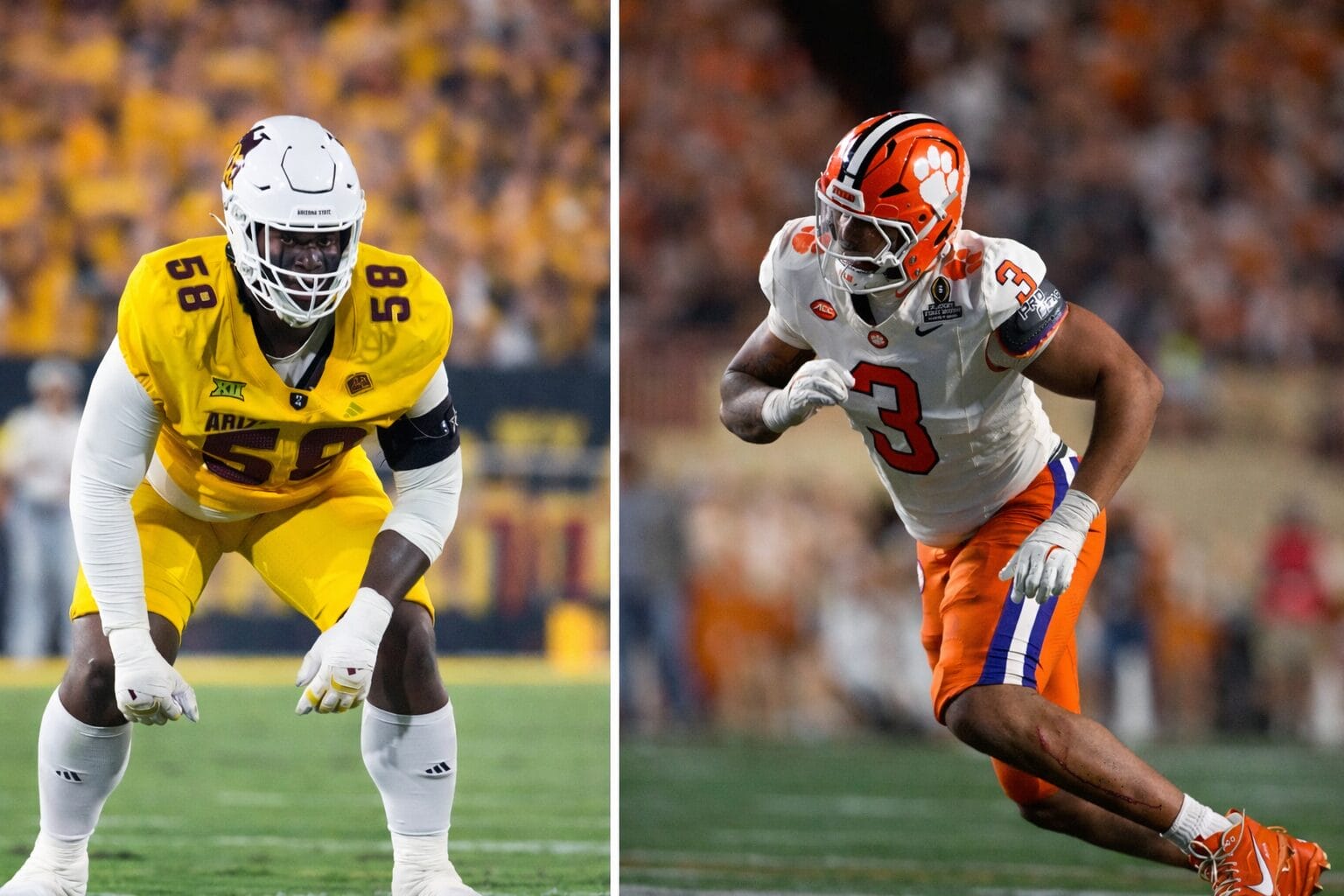
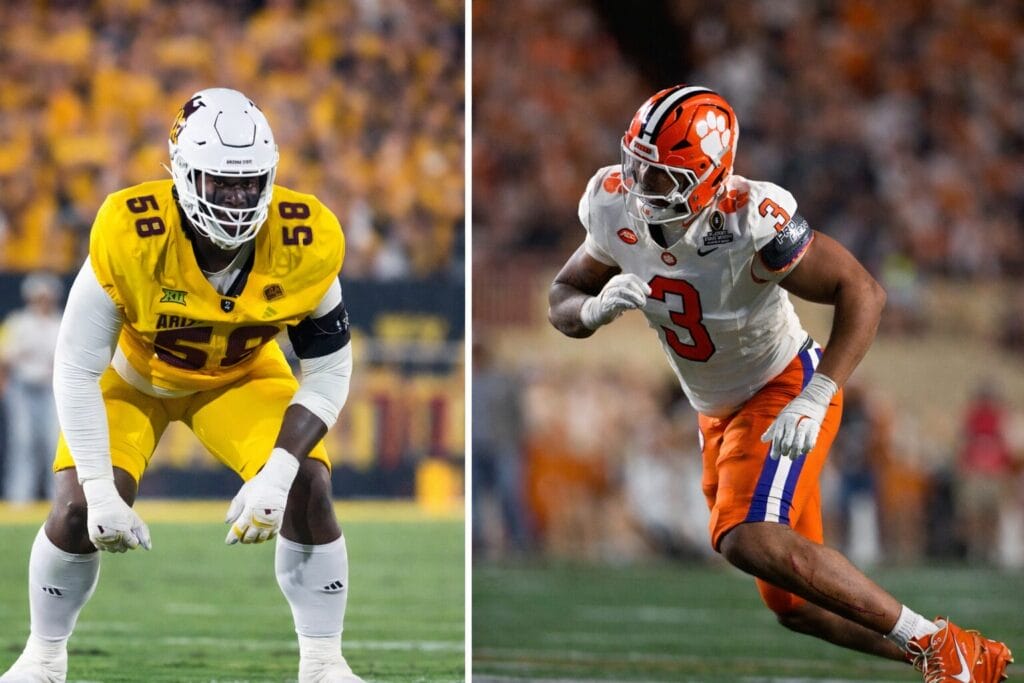
For you, I wanted to highlight five potential one-on-one battles that I’m excited to see during the week of practice, starting with the Shrine Bowl.
I have a new episode of the ALL NFL Draft Podcast dropping first thing on Monday morning previewing my trip to Mobile next week, and Director Drew Fabianich stopped by to help me break down some of the top players going to the game, amongst other topics surrounding the event, so stay tuned for that!
In my discussion with Drew, he not-so-subtly hinted at an incoming announcement for Miami EDGE Rueben Bain JR. Sure enough, on Wednesday, the ferocious pass rusher announced that he was heading to Mobile, along with Miami Nickel Keionte Scott, Miami T Markel Bell, Indiana CB D’Angelo Ponds, and Indiana RB Kaelon Black. Time will tell if all of those players stick to those commitments (word is that there will be a handful of big names NOT in Mobile), and obviously all of this is EXTREMELY fluid, but here are some of my favorite potential matchups that I’m antsy to watch.
Over the years I’ve been asked by several of you what it’s like to cover these All-Star Games, and while my approach does change depending on things like my content plan (I’ve had some years where I’ve prioritized daily podcasts, some where I’ve interviewed dozens and dozens of player interviews, and some where I’ve produced no content at all) and the practice schedule (which changed this year for the Senior Bowl; we’re back to afternoons!), there are some things that are pretty universal year-to-year.
Fran’s in-depth profiles on the prospects of the 2026 NFL Draft!
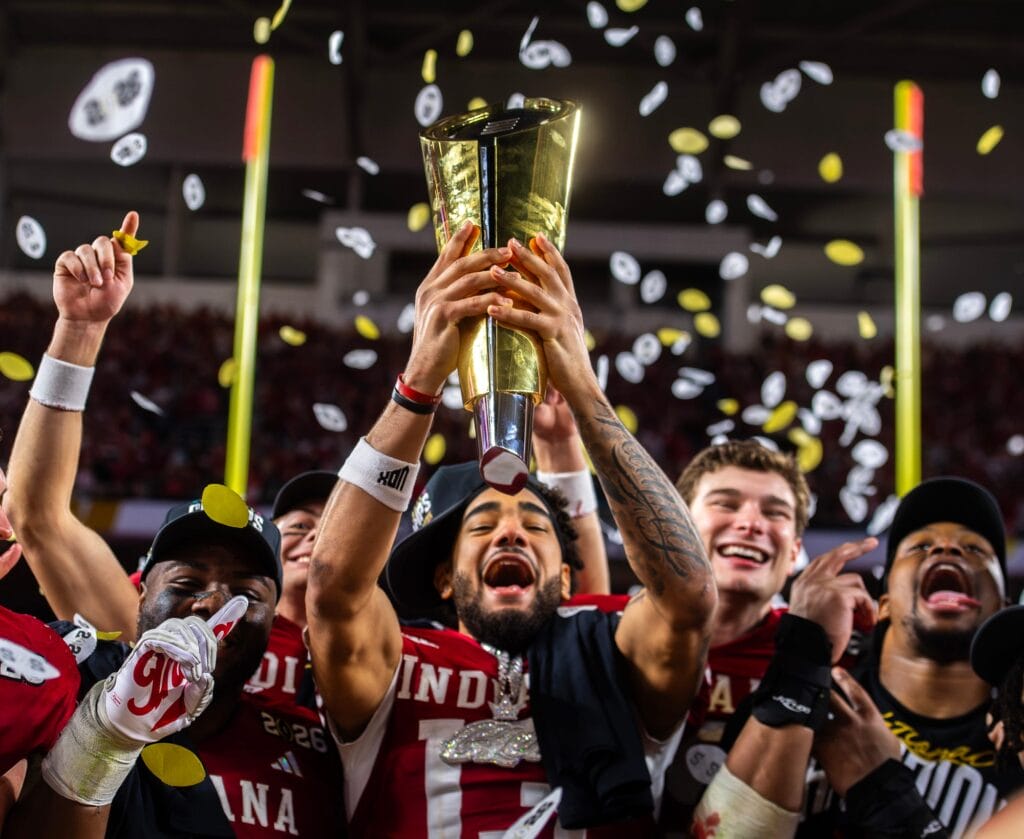
In the aftermath of Indiana’s victory over Miami on Monday night, I was startled to see so much of the reaction essentially be summed up as ‘well, anyone can buy a team now.’ To me, that opinion really misses the mark of what we all saw over the last two years.
Did Indiana pay players? Of course. You have to in today’s College Football. Did they bring in players through the Transfer Portal? Of course. You have to in today’s College Football.
But go back and look at the players that were IU’s impact performers this season. Who did Indiana beat head-to-head for these guys?
QB Fernando Mendoza had one FBS offer coming out of high school, but when he entered the Transfer last offseason there was some interest. He reportedly visited Georgia and Missouri, but neither school officially offered him a spot. His hometown Miami Hurricanes did not bring him in (signing Carson Beck instead). Florida State. Auburn. Florida State. Colorado. Duke. Iowa. Missouri. All of these schools dipped into the quarterback pool in the Portal last year. No one was as aggressive for his services as Indiana was.
When Indiana blew the doors off of Alabama in the Rose Bowl, do you think the Tide (who had one of the worst rushing attacks in the country this season) would have loved to have either RB Roman Hemby or Kaelon Black on their sideline? Hemby was at Maryland in 2024, Black at Old Dominion. Several playoff-caliber teams signed running backs in the portal last year (including Oklahoma, Oregon, Ohio State and Georgia), but none of them got the impact from their backfields that these two brought.
FS Louis Moore was a backup in 2024 at Ole Miss. Think he could have helped their defense this year?
CB D’Angelo Ponds, EDGE Mikail Kamara, LB Aiden Fisher, WR Elijah Sarratt, and several others were lightly recruited high school athletes (or sub-FBS players) who signed with HC Curt Cignetti at James Madison and then followed him. Kamara was a 0-star recruit; JMU was his only offer. Fisher had an offer from Old Dominion. Sarratt began his college career at St. Frances University in the Northeast Conference and primarily played DB in high school. Ponds was a 5-foot-8, 160 pound, 2-star recruit in Miami with very little recruiting interest because of his size. Those are players that he and his staff developed. Someone else could have paid them more money. They could have sought out greener pastures. Here at the Shrine Bowl, Cal CB Brent Austin did exactly that, playing at JMU in 2022 and 2023 before entering the Transfer Portal and choosing not to follow that staff to Indiana.
WRs Omar Cooper JR and Charlie Becker were both holdovers from the previous staff at Indiana and played the best football of their careers this year. It’s unlikely that they go undefeated without the two of them on the team.
Indiana identified players that fit their ethos. They targeted them, coached them up, and got them to execute at an unreal level to go undefeated in a 16-game season. It’s a great example of phenomenal team building, culture setting and coaching from Cignetti and his staff. It’s unlikely that teams will be able to replicate exactly what we saw this season in Bloomington, but you know they will try.
On Wednesday, in the wake of HC Sean McDermott being fired, the Bills held a press conference with owner Terry Pegula and GM Brandon Beane. In the press conference, Pegula went out of his way to make something very clear.
There’s a lot to unpack here. I don’t love making this declaration when Keon Coleman is still on your team. I can’t imagine that he is back for the 2026 season at this point, and even if that was always the plan, making this statement publicly does not help any trade leverage you may have had.
In the hours after that press conference, people have gone through the archives and pulled clips from team-produced access pieces behind the scenes of the draft two years ago, when they selected Coleman. In those clips, which take place both before and after the draft, Beane is seen praising Coleman and talking about how good of a player he is.
Personally, I don’t see this as some big ‘gotcha’ moment against Beane because, even with these clips, it’s entirely possible that what Pegula said this week is actually 100 percent true. I understand why Beane is under fire. That pick certainly doesn’t seem like it’s set to pan out. That roster had some holes in it, and the way he got defensive about that position, in particular, with the media last summer set him up for this blowback. That roster has other holes on it as well. He has not been perfect (no GM is), but I think the dynamic laid in front of us here is pretty typical.
While I don’t like the owner saying what he said publicly about the player, he didn’t say that Beane hated Coleman or had a 5th-round grade on im. He said he was not at the top of the list. Beane clearly liked him enough to take him where they did, but these types of debates and compromises happen all the time around the NFL every spring.
When teams draft players, it’s always nice when there is a consensus opinion from everyone involved. The fact of the matter is, those occurrences are rare. Not to mention, not every GM believes that consensus is ACTUALLY a good thing, because difference in opinion can often lead to constructive debate and is often a sign of a healthy draft room.
If I picked four of my favorite NFL Draft analysts right now in the media and stuck us all in a room, forcing us to come up with a draft board, there would be differing views on a large majority of the players. If one of us was then charged with making the final call on how the board looked, it is unlikely that they would just go rogue and only pick players that he or she liked more than the rest of us. Compromise is necessary.
This also brings another discussion point to mind. During the pre-draft process, when these debates happen in draft rooms as teams try to stack their board, it can often lead to a ‘my guy’ vs ‘your guy’ dynamic. However, once you get to late April, and the card is turned in, it’s not ‘my’ or ‘your’, because now it is ‘our’ guy. Many GMs have really strict rules when it comes to this. In this case, if there are people in the building who still harbor negative feelings about Coleman because he wasn’t ‘their guy’ before the draft, then their focus when talking about his struggles can drift from ‘how do we help him improve’ to ‘see, I told ya so.’ That does not help anyone.
So, after the draft, when Beane sits down with the media, whether it’s internal or external, of course he’s going to speak glowingly about Coleman. It serves no one any good to do anything otherwise. He also can be excited at the Combine that Coleman could fall to them on draft day. The board is nowhere near close to completion at that point in the process. Two months later, he could have him third or fourth in the pecking order when they were on the clock to start the second round while still LIKING the player.
Regardless, while I don’t think the book is completely written on Coleman yet as a player, the chapter in Buffalo is probably wrapped up.
Three years ago, in January of 2023, if I told you that Boston College HC Jeff Hafley (who just went 3-9 that season in his third year on the job) would be named the head coach of the Miami Dolphins three years later, you would have thought that BC went on a Hoosier-esque run. Alas, that is not how we arrived here!
Instead, after going 22-26 in four seasons at the helm of BC (which is not an easy college job), Hafley left to be the defensive coordinator of the Packers, a job he did well in for two seasons before being hired away this week. When Hafley left a head coaching job in college for an NFL coordinator role, it was a bit jarring. We don’t typically see coaches wilfully take what many see as a demotion. Since then, it’s popped up a couple more times.
Chip Kelly left the top job at UCLA to be the offensive coordinator for Ohio State (which soon got him back to the NFL and the Raiders). The following year, Bowling Green HC Scot Loeffler left BGSU to be the QB Coach for the Philadelphia Eagles.
With Hafley’s rise, could this be a more common occurrence? The track record of college coaches jumping right into the NFL is checkered, to be sure, but with Hafley setting a pathway here, I’d leave the door open to this happening again. Hafley’s previous NFL experience (he spent seven years in the NFL as an assistant with three teams before going back to the college ranks in 2019) helps him, but it’s something I wonder about.
College Football life is HARD for coaches. It’s a calendar that never stops. If you can trade that in for the NFL, which has a much more structured lifestyle, I think many would take the opportunity. We’ll see if it’s something we see more of in this hiring cycle, which is far from over!
Before Monday night’s National Championship Game, people got hung up on Miami QB Carson Beck saying that he graduated two years ago and didn’t take any classes this semester, and all of the torches and pitch forks are out to attack the state of College Football.
Beck got his undergraduate degree from Georgia years ago (most college programs have a path set for their players to graduate in the first 2.5 years on campus), so he has been doing post-grad work since then. He had to take classes in the fall in order to be eligible to play. The spring semester is just now getting underway, and Beck is off to the NFL.
Admittedly, I’m not as in-tuned with academic eligibility requirements now as I was years ago when I worked for a college team. However, I am old enough to remember former USC QB Matt Leinart taking exactly one class in his final year with the Trojans … in 2005 … and that class being ballroom dancing.
That was 20 years ago. This type of thing is not new.
Let’s not make a mountain out of a mole hill here. The problem is that the season bleeds into the spring semester, and everyone is basically in agreement that the College Football calendar needs to be completely re-tooled. Players taking a light course load in the final stretch of their careers as they prepare for the next level is far down the list of reasons why.
Lot of work to be done on my end in the next several days. Be sure to check out the Draft Guide for prospect notes. As I make those changes on every report, you’ll see them immediately!
Best,
Fran Duffy