© 2026 ALLCITY Network Inc.
All rights reserved.


The NBA’s All-Star break can be viewed as the season’s halfway mark. While teams have played about two-thirds of the regular season, February does come halfway between October and June, the totality of the league’s schedule when including the playoffs, too. After this weekend, with football now firmly behind us, basketball will be the primary focus of the sports world, and it won’t relinquish it until we’ve crowned another NBA champion. To prepare for that, let’s run through nine storylines I believe are some of the league’s most important ones from now until the regular season’s end.
For better or worse, this is the topic that’ll be screeched and argued by every talking head you know these next two months. It comes from a good place: It is bad when basketball teams are incentivized to lose games, which is what the NBA’s own rules do, and act on that incentive. We’ll see more teams blatantly doing this during the season’s stretch run, due to the hype around this year’s draft and several clunky pick protections that have forced franchises to prioritize their short-term futures, than perhaps at any prior point in the league.
What can be done about it, though? The NBA has made several attempts to disincentivize this approach. Narrowing pick protections to prevent situations like the Utah Jazz and the Chicago Bulls, who both owe their first-round picks to other teams if they fall outside the lottery’s top eight, feels like a simple fix. The rest are much more complicated, which includes even the most radical solutions designed to eliminate the draft entirely. If the league cared to stop tanking more than it prioritized parity — that is, making sure the best teams don’t get the best young player — then it might consider those options more seriously. But while the league doesn’t want its teams to tank, it clearly craves parity even more.

That said, the league has proven itself reactive to how its product is discussed. If this outrage reaches critical mass, there will likely be another attempted reform this summer. I don’t think the league wants that. They’d rather this conversation get drowned out by other issues, profit from what should be an excellent postseason, and get to next season, where a weaker draft class might stifle the most egregious behavior we’ll see from now until April. To that point, some of the league’s worst teams have also retooled with veterans. Only the Brooklyn Nets seem to be obviously entering next season without plans to compete at this point in time.
We’ll look into the many proposed solutions next week. But whether the NBA feels it must consider any of them more closely may be determined by how big this conversation becomes. Does it reach some point the league cannot ignore? If so, the league’s very fabric may once again be tweaked before next year.
The Denver Nuggets want another crack at the Oklahoma City Thunder, and their reformed roster appears poised to put up an even more competitive fight against the reigning champions they took to seven games last spring. When healthy, no team has more closely approached the Thunder’s dominance this season. When healthy, I believe they should be viewed in Oklahoma City’s same tier. When healthy … well, when? When are they going to be healthy?
Denver survived January, soldiering through that cold month with a winning record despite missing three-plus starters nearly every game. Last week, Peyton Watson was sidelined with a hamstring strain, a real concern. But Denver’s more concerning hamstring belongs to Aaron Gordon, the skeleton key to the team’s defense. The Nuggets have allowed almost 10 more points per 100 possessions without him this season, and the team expected to be Oklahoma City’s primary foil won’t be that if he isn’t right for a potential postseason clash between these two juggernauts.
Gordon’s return to the court is expected at some point in March. He should have time to ramp up for the postseason. But Gordon has now missed 63 regular season games and counting over the past two seasons. When he returns to the court isn’t nearly as important making sure he stays on it once we hit late April. Even with the team’s deeper bench and Watson’s emergence, Denver needs Gordon to be available to be the tier-one contender we think they are.
Player availability is the league’s most serious issue. Injuries cause stars to miss far more games than the occasional liberty taken by tanking teams to hold our their most talented guys. Gordon might be the most notable example, given his recent track record, but it’s almost certain one of the league’s elite will have to adjust to a key player going down between now and April. (The 65-game rule also makes this matter more than it ever has before.) Let’s hope for health. The ever-rising number of injuries, however, suggests we should prepare for the worst.
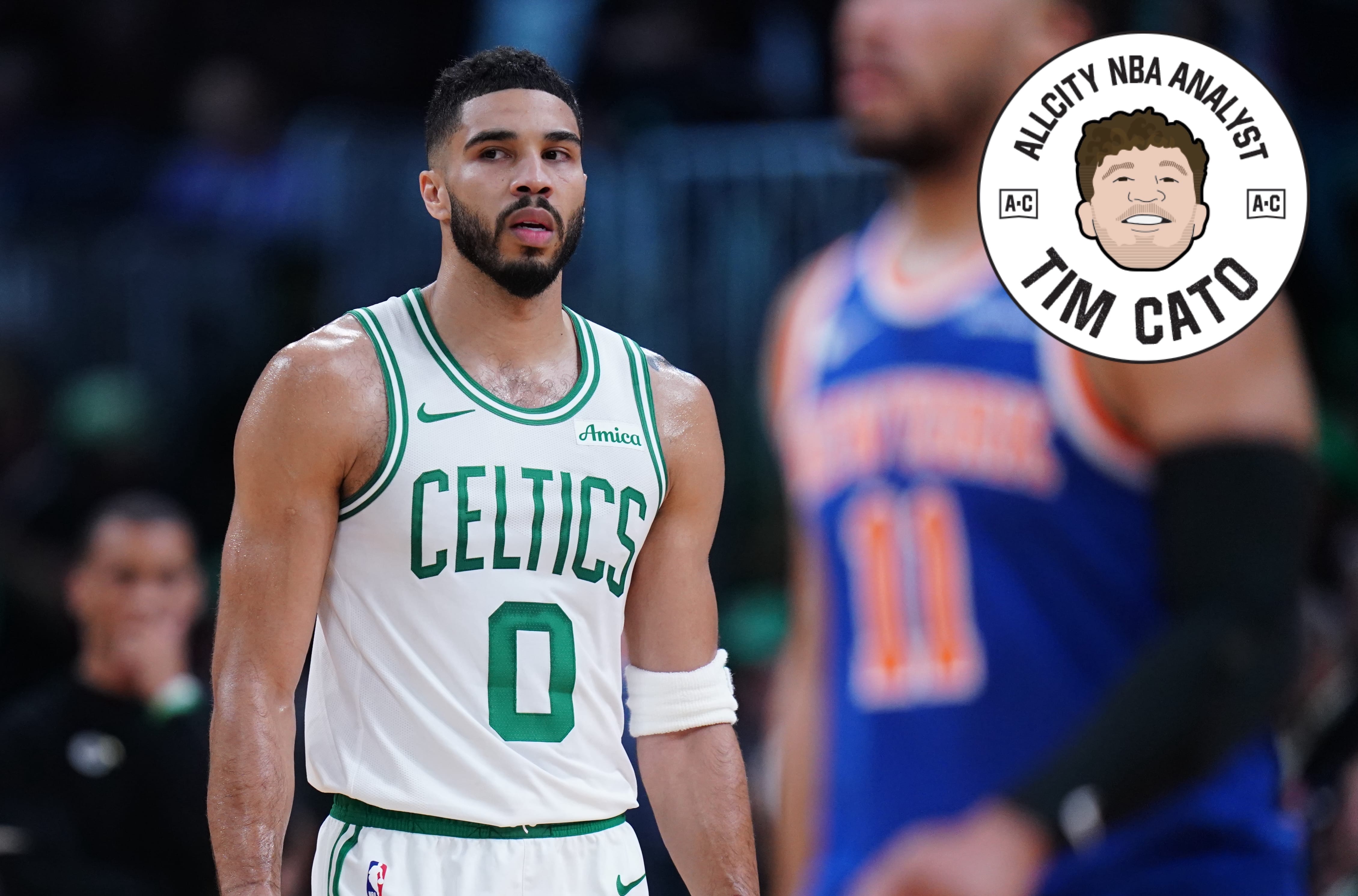
The Boston Celtics were not supposed to look like contenders without Jayson Tatum this season. Even if they remained competitive, this was meant as a gap year, one spent waiting for the All-NBA first-teamer to return. Instead, the Celtics have the league’s fourth-best record and third-best point differential.
Boston has accomplished this by arguably being the league’s hardest-playing, most consistent team. This team doesn’t miss rotations nor jog through them; they hurl themselves at the offensive glass every chance they get; they deconstruct opponents less talented than them. Look under the hood, though, and it’s harder to believe in this team’s absolute ceiling being title contention. Boston has a losing record (8-9) and a negative point differential against top-10 opponents. It prioritized tax relief over roster improvements at the deadline, which makes sense as a longterm play to rebound next year. Replacing Anfernee Simons with Nikola Vucevic could help, but it’s not guaranteed to. No one in the Eastern Conference wants to face them in the postseason, make no mistake, but it’s reasonable to also believe that they’ll falter at some point. That it’ll become clear this team has a Tatum-sized hole.
Unless he does come back, and he might.
Tatum recently practiced with the Celtics’ G-League squad, and it’s been continually hinted that he could return to the court this season. If he does and looks even mostly himself, we’ll have to completely reframe our expectations for who might actually come out of the East.
Count me as a skeptic that the league’s new All-Star Game format, pitting American players against international ones, will work any better than the other failed changes. We’re probably headed, next week, towards more discourse focused on fixing this unfixable game. It’ll feel like a culture war issue meant to distract from the league’s actual issue: When stars get hurt more often than ever before, with already three players being replaced due to injuries, why would they care? Don’t mock the players for not trying when it’s the league’s responsibility, truly, to figure out how to more often keep them on the courts that actually matter.
It’s anticipated the league will announce its findings, and potential punishments, for its investigation into the L.A. Clippers stemming from Pablo Torres’ investigation into what appeared to be salary cap circumvention to further pay Kawhi Leonard. That’s notable for the sport. Under the league’s new collective bargaining agreement, where teams are essentially held to a hard cap, every dollar has more importance. It depends what the league finds, of course, but coming down on this behavior feels important beyond L.A.’s alleged transgressions.
It’s possible how the Clippers finish this season, however, will have an even larger impact on the league. L.A. owes this year’s first-rounder to Oklahoma City, as you may know, and the Clippers downgraded its roster at the trade deadline. They’ve won too many games to avoid being a Play-In Tournament team; I’m confident L.A. won’t regress to the version of itself that started 6-21. It still matters where that picks fall, though. The Clippers losing in the Play-In Tournament, giving the Thunder even some slim percentage points at the top four, would set up a true disaster scenario that the league, with all its parity-driven thinking, would dread.
Cooper Flagg will be the best basketball player selected in the 2025 draft. There isn’t all that much doubt about that. And if the season ended today, Kon Knueppel would have my vote over him.
Thus far, Knueppel has had the most efficient season from a rookie of all time. I’m excluding big men but including anyone else with at least 800 minutes: forwards who mostly dunked, older rookies who came in polished; bench cogs who played smaller rotation roles. Knueppel clears them all, and he’s done that while averaging nearly 19 points per game as a full-time starter. He has been spectacular far beyond his 3-point shooting, although that’s the standout; he’ll shatter the rookie record for most 3s made in a season sometime later this month. And he’s been doing exactly this since the season’s first game.
Flagg can’t be blamed for starting slower. He was told he would have to fit into a team that was designed to win this season, an idea he believed even as it started unraveling from the season’s very first jump ball. He’s played large swaths of this season either without a point guard, with an undrafted rookie free agent at point guard, and with D’Angelo Russell. He had to realize he was Dallas’ best player and the team’s primary option by himself. Of course, given all that, he’s had more bad games, more 4-of-13 shooting outings, than his Duke teammate.
If Flagg plays the rest of this season like he has the past six games — averaging 32 points on 53 percent shooting while making 46 percent of his 3s — there won’t be any discussion who wins. Knueppel can’t top those heights Flagg has lately reached because almost no player, of any experience level, can. Even then, these are the two most impressive rookies we’ve seen enter the NBA at the same time in decades. Let’s hope Flagg’s foot injury heals quick, because this race should have a hell of a finish.
Charlotte has been basketball’s coolest story of late, and it’ll continue if the team keeps playing like this. LaMelo Ball has positively impacted winning his entire career — don’t forget the Hornets were 3-36 without him last season — but that was often hard to be sure about due to the lack of talent around him. Knueppel and Moussa Diabaté and more health has changed that. To Ball’s credit, he has also reduced his TikTok hooper insanity. Don’t get me wrong: Watch Charlotte and, most games, you’ll still see Ball do something you haven’t seen before. But those moments, increasingly, are positive ones. It’s still impossible to predict his brain’s decision tree on any given possession. There’s just no question, these days, that it scrambles opponents far more than anything else.
Henderson missed this season’s first 52 games. With his return, the Portland Trail Blazers hope, come answers about the franchise’s forward direction.
Portland needs a point guard. This team’s offense has been cataclysmic without Deni Advija; Damian Lillard and Jrue Holiday, if he’s on the team, can’t be next season’s primary initiators. This year’s coming draft has point guard prospects galore, and five are projected to be top-10 picks. That would be great news, but Portland has won so much this season that the team’s all but locked into the Play-In Tournament. And, depending on what happens, the Blazers might not have a first-round pick at all.
Portland owes its first-round selection this summer to the Chicago Bulls, but that pick does have top-14 protections. This situation could resolve itself: If Henderson thrives the rest of this season, Portland losing that pick wouldn’t have such extreme implications even if the team has a successful Play-In Tournament. If Henderson doesn’t take another step, Portland just might not be good enough to beat two teams — likely the Clippers and the Golden State Warriors, who both got worse in the past month — and it will still have that pick to use, perhaps in an attempt to move up into that top-10 to draft one of these studs.
The worst case scenario: Henderson doesn’t improve from his first two seasons but Portland still wins in the Play-In Tournament to lose this summer’s selection. But Henderson has the chance to erase this conversation completely if he finally comes good on his draft prestige.
One more guard whose play the rest of this season has major implications on his franchise’s future is Anthony Black. Right now, the Orlando Magic are set to pay a combined $155 million to Franz Wagner, Paolo Banchero, Jalen Suggs, and Desmond Bane next season. Even through all their injuries, we’ve seen that foursome enough to know it’s not good enough to be a contender in the East. Orlando should be prepared this summer to make a decision on which one’s the odd man out.
Black’s ascension this season has taken him from an energy bench guard, as he was his first two years, to an All-Star-adjacent level. Since Nov. 14, he’s averaged almost 18 points and five assists while knocking down about 35 percent of his 3s. Notably, that hesitation he once had behind the arc is gone. Is this really who he is now? Will this mini-slump he’s currently stuck in carry past the All-Star break? If so, how does that affect how much money Orlando’s willing to offer him in his rookie extension? If not, does he inspire the confidence needed for Orlando’s front office to choose him over one of the core four? Over Banchero or Suggs?
Orlando’s huge decision will be affected by how well he plays. We’ll be watching.