© 2026 ALLCITY Network Inc.
All rights reserved.



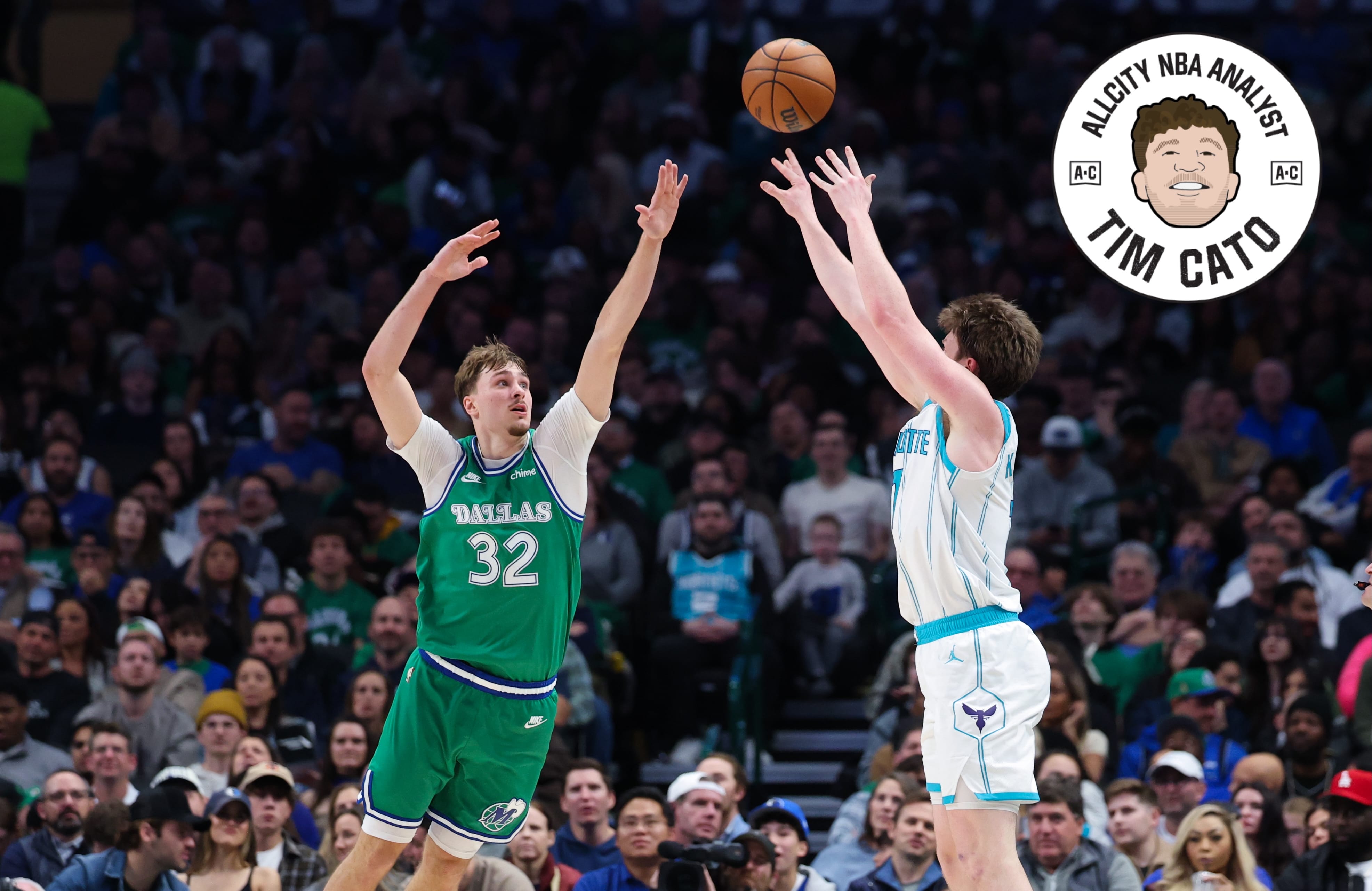
We made it. Another NBA season has concluded, 82 more games crossed out in the calendar for every team, and we’re now set for the postseason, which demands our excitement and anticipation, of course. We’ll have more on that later this week; right now, it’s time to name who should win each major award.
I’ve held off including MVP and All-Blank teams because those typically overshadow the others, which are interesting in their own rights. But there are five awards worth discussing in earnest: Defensive Player of the Year, Most Improved Player, Sixth Man of the Year, Coach of the Year, and Rookie of the Year. For me, two of these awards were easy locks. Three more had ample debate and indecision involved, not to mention how difficult it was to choose who went into non-first-place spots.
Please note: While I’ve previously been an award voter, I’m not one this season. These are my meaningless selections, not predictions, with analysis attached to hopefully explain in a satisfactory manner why I chose one player over another.

DEFENSIVE PLAYER OF THE YEAR
- Victor Wembanyama, San Antonio Spurs
- Rudy Gobert, Minnesota Timberwolves
- Derrick White, Boston Celtics
Wembanyama is the defensive player of the decade, perhaps the defensive player of all time. No one in league history has moved at his height like he does. When Wembanyama’s on the court, opponents shoot 7.2 percent more 3-pointers than usual. (No player’s presence has more of an impact, per Cleaning the Glass.) It’s an Elizabethan collar — those cones you put on dogs after surgery — on an opponent’s offense. It’s a forced diet. What’s worse, for opponents, is that they shoot worse on those 3s they must take, too.
No player in the league lives in an opposing player’s hippocampus like Wembanyama. The best perimeter defenders live in their assignment’s heads; the best rim protectors in the noggin of every player who dribbles inside the 3-point arc. Wembanyama consumes every single second of an opposing offense, however. I once asked 3-point snipers about being blocked by the 7’4 Frenchman. “(He’s defying physics) as I did understand them,” Pat Connaughton told me then. That an internal Wembanyama proximity ping is feared from 25 feet away from the rim the same as 2.5 feet explains the dilemma he creates.
Recall Patrick Ewing’s famous coaching moment during a huddled timeout: What kind of shot is that? Have you ever shot that shot? Do you work on that shot? When? That’s the Wembanyama effect. He has his Never Minds, the moments when players drive and turn away from an attempt they’d take 99 percent of the time. But I’m partial, too, to the have-you-ever-shot-that shots, like this one from Daniel Gafford, his fifth-furthest attempt from the basket this entire season.
Don't like ads?
Wembanyama leads the league in defensive estimated plus-minus, the basketball world’s favorite catch-all metric, and owns the league most significant defensive on-off swing. When he’s on the court, the San Antonio Spurs allow 12.3 fewer points per 100 possessions. For all this chatter about what shots he scares teams from taking, he still led the league with 3.1 blocks per game this season. In San Antonio’s second and third games, he recorded nine blocks and six, respectively. Those were his most and third-most this entire season; three games into the year, teams stopped trying to change him. They changed their gameplans, instead.
San Antonio has many good-to-great defenders around him, and they work incessantly to keep Wembanyama near the rim with pre-switches and disrespectful assignments on opponents they trust him to leave open for the team’s betterment. But Wembanyama amplifies every teammate, terrorizes the league’s most important 304 square feet, the paint, and should rightfully earn his first Defensive Player of the Year award. It’ll be the first of many.
It was once Rudy Gobert who most received these hagiographies: That how offenses behave when he’s on the court have had almost no bearing on what they do with him off it. Gobert has never replicated this to Wembanyama’s level because virtually no defender ever has, but Gobert still instills this flip-switching recognition from opponents even in his age-33 season. Gobert had the league’s second-highest impact when on the court; Minnesota conceded nearly 12 points fewer per 100 possessions whenever he was one of the team’s five on the floor.
Among qualifying players who defended at least five rim attempts per game, Gobert had the fifth-most notable influence on those shots this season: Opponents challenging him within six feet of the rim shot nine percent worse than expected. (It’s a shade better than Wembanyama’s figure; that says, of course, more about Wembanyama’s never minds than his actual influence.) When determining Gobert’s placement, I factored in these stats above but also his minutes, which ran ahead of most comparable candidates. Chet Holmgren was the other center who had outsized rim deterrence and on-court impact numbers. Gobert played almost 400 more minutes than him.
It still pains me to omit Holmgren. It was equally difficult to separate, and ultimately exclude, which of Ausar Thompson and Jalen Duren deserved more recognition from the Detroit Pistons’ defense this season. (Thompson is the answer; he just barely missed out.) Scottie Barnes might be the league’s most complete defender; he had another very strong case. Dyson Daniels was still superb; Jalen Suggs didn’t qualify under the league’s 65-game rule but would’ve been in consideration if he had.
The last selection, for me, goes to Boston’s Derrick White. He finished two blocks shy of 100, a feat accomplished only twice this season (Dwyane Wade did it in his 2008-09 season; Tracy McGrady in 2000-01.) He contested more than five shots within six feet of the rim each night; no other guard came close to that quantity, never mind the fact that White influenced those shots to be converted nearly nine percent less often than expected.
Don't like ads?
Neemias Queta was another reason for Boston’s fourth-place defense this season, but White played 600-plus more minutes and was the heartbeat of Joe Mazzula’s overperforming unit that defied every preseason expectation. White’s presence graded out to eight fewer points for every 100 possessions when compared to the minutes without him. White has made the All-Defense team twice before and placed for Defensive Player of the Year the past two seasons; I don’t think most voters will have him quite this high, but I’m comfortable doing exactly that.
MOST IMPROVED PLAYER
- Nickeil Alexander-Walker, Atlanta Hawks
- Ryan Rollins, Milwaukee Bucks
- Neemias Queta, Boston Celtics
I have bias towards the Alexander-Walker-type candidacies: Known players in their mid-to-late 20s who suddenly morph from a successful role player to an unexpected stardom. We spent six seasons with Alexander-Walker, who averaged about 11 points his second and third seasons as he cycled through three different teams. In Minnesota, he embraced his off-the-bench role as a single-digit scorer for two-and-a-half years, and he was great at that. He was poised to play 10 more seasons in the league as a two-way bench guard.
Sometimes, these defense-first role players end up on bad teams that need them to shoot, such as Mikal Bridges’ time in Brooklyn or Cam Johnson’s time in Brooklyn or Michael Porter Jr.’s time in Brooklyn. Alexander-Walker went to the Atlanta Hawks, a team with higher expectations, one which has now officially finished as the No. 6 seed in the Eastern Conference, even if it took many changes and twists to reach this point. Atlanta would not have accomplished that without Alexander-Walker’s breakout season, however. The player who had joined Atlanta averaging 8.6 points for his career suddenly leapt to 20.8 this year; he’s among the NBA’s top-40 scorers.
Alexander-Walker took nearly as many 2s this season (566) as he did the last three seasons combined (585), and he converted nearly 53 percent of them, a better mark than he had those last three years. I’ll take Alexander-Walker as Most Improved over Ryan Rollins, the only other candidate who made sense, because I slightly prefer the Mia-Thermopolis-esque role player glow-up to a young player finally given his chance.
Rollins sure shot his shot, though, albeit on a team that needed someone to take shots. In his fourth season, Rollins went from an untrusted prospect to a bonafide starting point guard. He played 25 games his first two seasons, averaged 6.2 points last year, and broke out for 17.3 points per game on league average efficiency while starting nearly every game.
While Jalen Duren will land on most ballots, he’s a lottery selection in his fourth season, one whose scoring prowess was impressive this season but not wholly unpredictable. As stated, I lean towards players who had more seasons before breaking out when possible, which means Neemias Queta earns my third spot on this unofficial ballot.
Don't like ads?
In his first two seasons with the Sacramento Kings, Queta struggled at the simplest things, such as catching passes zipped around to him inside the paint. This season, he emerged as Boston’s starting center, a ferocious rebounder on both ends of the court and a ball-hunting rim protector with menace behind his protective leaps. His hands are an asset, too. For some reason, this award excludes players who don’t meet the 65-game limit, which means Daniss Jenkins, Ajay Mitchell, and Jaylon Tyson. But Queta’s 76 games would’ve made him a lock over them as is.
SIXTH MAN OF THE YEAR
- Keldon Johnson, San Antonio Spurs
- Jaime Jaquez Jr., Miami Heat
- Reed Sheppard, Houston Rockets
Keldon Johnson’s candidacy is a statement about the importance of role. Four seasons ago, he had averaged 22 points, only for San Antonio’s Wembanyama era to begin that summer. Since then, he had had two subpar seasons, ones where it wasn’t clear if he had, or should have, any future with the Spurs. But Johnson finally morphed from lead scorer, because who else would do it, to multitooled bench staple this season. It changed his career, earned him my first choice selection for Sixth Man of the Year.
Johnson thrives in between the action, finding opportunistic post-ups and body-banging drives from the court’s weak side. He converted more than 60 percent of his 2-pointers this season, the exact buckets most needed for a team with on-ball drivers and Wembanyama’s gravity but in his own Keldon-esque flavor. Every team wants a player it can trust to run a two-man action while the defense’s still occupied with his star teammate hanging out in the opposite corner. Surely, this possessions about to evolve into some action ran for that dude over ther— ah, no, Johnson just scored, never mind.
Jaime Jaquez Jr. comes next with a more impressive statistical spread: 15 points, five rebounds, five assists each night, with 74 of his 75 games coming from the bench. It was a bounceback season: Jaquez’s excellent rookie season turned into a plodding sophomore one, but whatever progress was passed up last season must’ve been invested in this one.
Miami’s screwball system, which expelled pick-and-rolls, was perfect for Jaquez’s pickup hoops artistry. It doesn’t even matter he finished with only league average efficiency when you consider how vital his whirling, spinning, posting isolation abilities played into the Heat’s vision.
For third, with apologies to Tim Hardaway Jr. and Naz Reid, I’ll side with Reed Sheppard, who played all 82 games and hit at least one 3 in 79 of them, tied for the second-most in league history. Sheppard’s leash was inconsistent, but his ball-handling verve was so obvious every single time he stepped onto the court for the Houston Rockets. Perhaps it stood out more due to the absence across the rest of the roster, but Sheppard’s 13.5 points reassured anyone who wondered why he was selected third overall two summers ago.
Don't like ads?
COACH OF THE YEAR
- Joe Mazzulla, Boston Celtics
- Mitch Johnson, San Antonio Spurs
- Jordan Ott, Phoenix Suns
Mazzulla is the runaway winner for me. Boston wasn’t supposed to defy its leap year expectations; it wasn’t supposed to have enough big men; it wasn’t supposed to take its offseason absences, two permanent (Kristaps Porziņģis, Jrue Holiday) and one temporary (Jayson Tatum) in stride and finish as the Eastern Conference’s second-best seed.
But Mazzulla turned and tweaked his style: Jaylen Brown, you’re taking more mid-range Js now; Hugo González and Jordan Walsh and Baylor Scheierman, y’all are bench mob demons who crash every offensive board and guard like hell; Luka Garza, you’ll work as a backup center who replicates the five-out spacing that beloved in Boston. It worked all season with an intensity that never slipped. No team in the league beat the bottom-10 teams worse than Boston did. (The Celtics outscored them by 17 points per 100 possessions.)
Mitch Johnson has the tiniest asterisk attached to his second-place candidacy: He does get to coach a fully unleashed Wembanyama. But after last season’s experimentations, where Wembanyama popped 3s as often as he liked, Johnson honed a more rigorous offensive approach for the most unique player in league history. That isn’t simple. There’s no playbook or past precedent to lean on. Wembanyama is so talented that it’s hard to go wrong with him. At the same time, you must admit San Antonio most often got it right.
I’m insisting that Jordan Ott earn the third slot for Phoenix’s remarkable success, which was not intended to happen and was roundly dismissed before this season began. What Ott did in Phoenix shared similarities with Boston’s approach: Both teams eschewed any priority on layups and instead focused on a mid-range-based game with players constantly attacking the inevitable misses that flowed from it and launching 3s from those second chances. While Phoenix faltered slightly when hit with a rash of injuries, the team’s 45-37 finish was still far beyond any reasonable predictions. Ott deserves his flowers for it.
ROOKIE OF THE YEAR
- Cooper Flagg, Dallas Mavericks
- Kon Knueppel, Charlotte Hornets
- V.J. Edgecombe, Philadelphia 76ers
Kon Knueppel, for weeks, has been the player I’ve anticipated ranking first on this list. His is a deserving candidacy, one built from exceptional polish that fit right into Charlotte system that clicked after some early missteps. Cooper Flagg had been the anticipated winner; Knueppel’s ascension, like Charlotte’s, was more of a surprise. Knueppel’s case has been one of comparable stats and hyperefficiency; Flagg, in return, can offer more counting numbers but not nearly the winning impact Knueppel delivered.
| KNUEPPEL | FLAGG | |
| GAMES | 81 | 70 |
| PTS/G | 18.5 | 21 |
| TRB/G | 5.3 | 6.7 |
| AST/G | 3.4 | 4.5 |
| STL/G | 0.7 | 1.2 |
| BLK/G | 0.2 | 0.9 |
| FG% | 0.475 | 0.468 |
| 3P% | 0.425 | 0.295 |
| FT% | 0.863 | 0.827 |
| eFG% | 0.601 | 0.498 |
| BPM | 2.8 | 1.4 |
| VORP | 3.1 | 2 |
I just think back to Flagg’s expectations this season vs. what he actually dealt with. Flagg was told he would not need to be the team’s star this season. “The pressure is not going to be on him as much as a usual No. 1 pick,” Anthony Davis said before the season. And, yet, Flagg was turned into the nominal point guard during the first weeks of the season. He was routinely asked to be the No. 1 option on a team with arguably the worst spacing in the league and delivered on that more often than not.
Don't like ads?
Generational players have dealt with worse conditions and still created more winning basketball from it. Flagg does not get graded on a curve because he’s the youngest player in the league; that’s not a consideration for an award like this. In the same manner, Knueppel does not get elevated because his team won 44 games. If he had Flagg’s role, he might’ve come closer to matching some of his counting stats while losing efficiency while doing that. Perhaps. But it’s unlikely any rookie could’ve fared better without a point guard, with a revolving door of players and front office drama, than Flagg did.
Flagg finished his season with a negative estimated plus minus (EPM) while Knueppel’s was superb (plus-2.8, within the league’s top-40). But Flagg’s mark was the best on his team; when Dallas was so often this pitiful, and when Knueppel’s teammates LaMelo Ball and Brandon Miller both finished higher than him, it’s clear that Knueppel benefitted from an infrastructure perfect for him while Flagg was dragged down by his.
Knueppel’s game is so polished that nearly any infrastructure, even a negative one like Dallas’, would’ve been one he would have made better. Flagg was sometimes overwhelmed by the No. 1 role he wasn’t supposed to have. However, he was also let down by the team’s dearth of shooting, the injury absences, the unclear No. 2 option who was often filled by committee.
The exaggerated version of this Rookie of the Year debate would be 2017’s: Joel Embiid received 23 votes for playing 31 spectacular games; Malcolm Brogdon won it instead with a steadier, ho-hum 75 games as an instant positive contributor. It’d be offensive to both candidates this season to not restate that’s an exaggeration: Flagg played far more than Embiid; Knueppel was far better than Brogdon. There are cases for both Duke rookies, and Knueppel’s likely win should come with no regret. His season was that spectacular.
But since these two’s candidacies are so close to each other, I’m comfortable siding with the player who achieved much higher heights — he had the most 40-point games, and the highest-scoring one, among any teenager in league history — despite Dallas never intended him to be the lead option. Knueppel’s consistency and elevation of a roster that wasn’t expected to be this good is an equally compelling case. For Rookie of the Year, it just seems right to side with the player who did more with less than the one doing almost as much with more.
V.J. Edgecombe rounds out the Rookie of the Year rankings. He has steadily been the third-place finisher all season, and that hasn’t changed in the slightest. In another season, a first-year player who finished with 16 points, almost six rebounds, and more than four assists every night would be the certified favorite. This isn’t one of those seasons, but I can’t imagine Philadelphia fans care much about that. They’re just glad Edgecombe’s on their team.
Tim Cato is ALLCITY’s national NBA writer currently based in Dallas. He can be reached at tcato@alldlls.com or on X at @tim_cato.
Get Chicago's Best Sports Content In Your Inbox!Become a smarter Chicago sports fan with the latest game recaps, analysis and exclusive content from CHGO’s writers and podcasters!
Just drop your email below!
Comments
Share your thoughts
Join the conversation

The Comment section is only for diehard members
Scroll to next article

Don't like ads?
Don't like ads?