© 2026 ALLCITY Network Inc.
All rights reserved.


A fielding error often happens because a player is thinking too far ahead, like failing to secure a ground ball because he’s thinking about the throw. Step one has to happen before step two. A baseball team can falter in a season for a similar reason. Start watching the standings too closely or thinking about playoff hopes too soon, and bad things will often happen.
It’s hard to resist doing that, however, especially when the Cubs are doing as well as they are. After Friday’s 2-1 loss to the Pirates, they are still thirteen games above .500 at 42-29 and have a fairly comfortable cushion in the division standings. They are positioning themselves well to win the National League Central for the first time since 2017 and make their first postseason appearance since 2020. But it’s still mid-June, and there’s a lot of season to be played. It’s wiser to focus on things a day at a time.
“There’s a job to do today, and that’s what you’re worried about,” manager Craig Counsell said before Friday’s game. “You can’t get past today. There’s just no reason to; it’s not helpful. If you’re a player in the room, you understand that, and you’re good at it.

“Because if you’re worried about something else other than today, today is going to kick your ass.”
In Friday’s case, the day itself was plenty of a challenge on its own. Not a lot of context needs to be given to illustrate how tall an order it is facing Paul Skenes, but all the same, he had a 1.95 ERA running from his May 11, 2024 debut and a 1.88 ERA this season coming into Friday’s start.
The Cubs had the advantage of some familiarity; this was the sixth time they had faced him since his debut last year, so for as good as Skenes is, they have a better idea of what they’re up against than a lot of teams.
“More than any other pitcher, frankly, in the major leagues, we’ve had experience against this guy,” Counsell said. “So it doesn’t become a game planning meeting, it becomes execution for both sides. When you play somebody a lot, it becomes execution. That’s how this works.”
The Cubs didn’t beat Skenes, but the offense got him out of the game after five scoreless innings. A few long at-bats, like in the third inning, when Ian Happ drew a six-pitch walk after Reese McGuire’s single, and then — although it ended in an out — Kyle Tucker used up ten of Skenes’ bullets to before he flew out to right field.
That wasn’t enough to push any runs across the board, and even though the Cubs had a runner in scoring position in the sixth inning after Skenes was out of the game, they scored only on a fielder’s choice ground out in the eighth before going down in order in the ninth and tenth innings. The Cubs’ familiarity with Skenes helped the offense get to the Pittsburgh bullpen — ranked 20th in baseball with a 4.10 ERA going into Friday — but they didn’t come through against that group either.
Of the Cubs’ offense, Happ had the most success against Skenes. Happ reached base all three times he faced Skenes on Friday. Going back to last season, Happ had 13 plate appearances against Skenes before seeing him three times on Friday.
“Pitchers make adjustments,” Happ said. “That’s the back and forth. He’s using some of his pitches a little bit more than he has in the past. Obviously, you have your at-bat history against him, so you’re not sure exactly how he’s going to attack you. He’s done a lot of different stuff to me throughout different at-bats. You have that history and then try to play the cat and mouse, and that’s the fun part of it.”
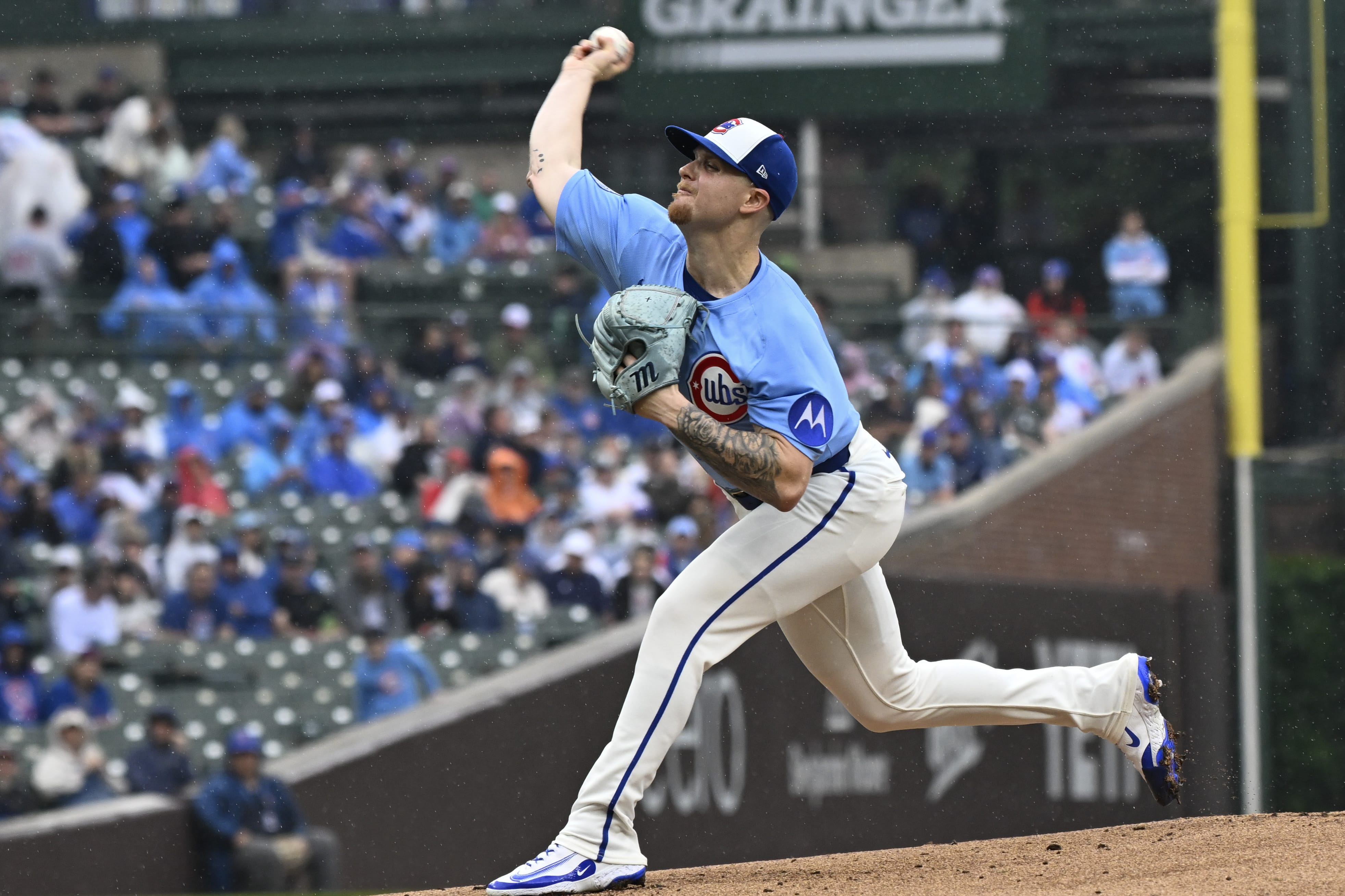
Though the offense struggled to get much going against Pirates pitching, Cubs starter Cade Horton went toe-to-toe with his pitching counterpart and also held the offense he was facing scoreless. Horton last a bit longer, going two outs into the sixth inning before being lifted at 76 pitches. He’s gone well past that pitch count a few times since his callup in early May, but only once in sixth other starts at the major league level has Horton recorded more outs than he did on Friday.
Horton limited the Pirates to three hits — two singles and a double — and struck out four with just one walk while squaring off against the best pitcher in the National League, if not all of baseball.
“It’s fun. Iron sharpens iron,” Horton said. “Being able to compete against him was really fun, and hopefully we’re doing it for a lot of years.”
That kind of marquee pitching matchup garners a lot of extra attention, and in the case of the pitcher in Horton’s shoes who has less experience but nearly as high of expectations, there’s a lot of pressure as well.
“I’m not scared of the moment,” he said. “I love the moment [and] just going out there and competing.”
Reese McGuire caught Horton on Friday for the second time in the majors since the two of them were in Triple-A Iowa earlier this season. He worked with Horton some during spring training, and McGuire said the biggest difference he is seeing in Horton in mid-June compared to spring is how much he trusts his stuff and how much he is realizing how good he is. All of that came through in a high-pressure outing against Skenes.
“No matter who’s pitching against him, whoever he’s throwing against, he game plans the same way,” McGuire said. “He’s focused and locked in from the moment I see him in the clubhouse to when we take the ball out there together.”
With Shota Imanaga expected back soon, Horton’s spot in the rotation will have to shift. Based on how well he has pitched, Horton is not likely to lose his place, but one of Ben Brown or Colin Rea would have to move to the bullpen to make room for Horton to remain in Chicago.
For now, Counsell said he looks forward to handing the ball to Horton when his next turn in the rotation comes, and in the big picture, the Cubs are slowly approaching a critical trade deadline in which they could add more pitching depth. But those things are in the future, and Counsell and the Cubs are thinking only about today.