

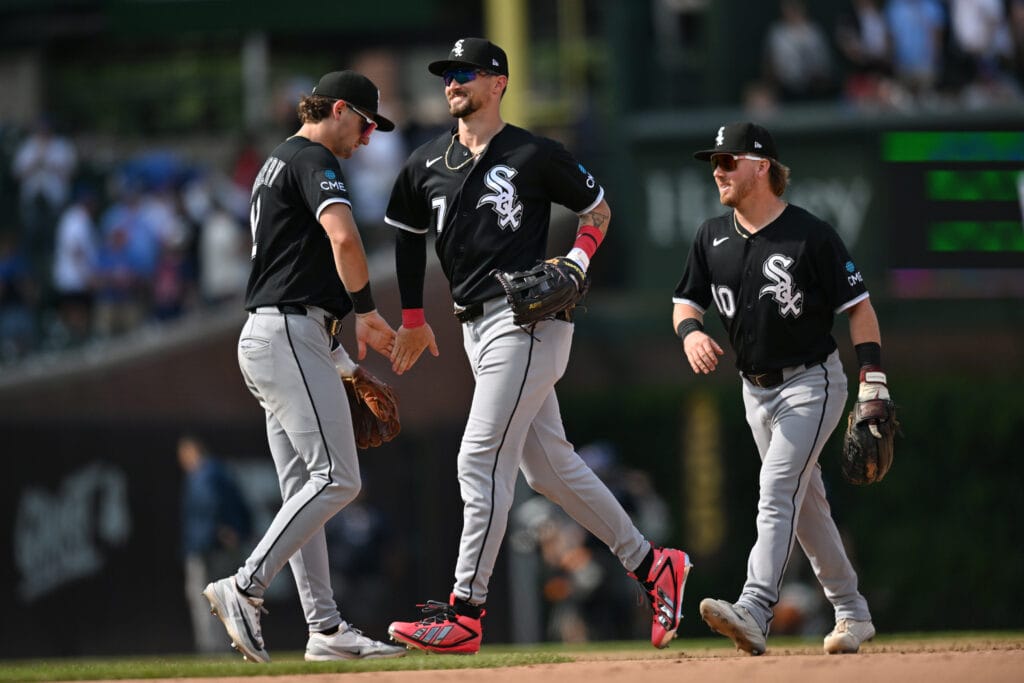
Not that Will Venable’s team needed it, but in many ways Wednesday’s 3-0 over the Cubs was a reminder to a lot of people outside of the organization that one of the defining qualities of the 2026 White Sox is that they don’t get rattled very easily.
With 126 games played, their longest losing streak this season is just four games. It took until the first week of August for that to happen. The Sox might shrug off losses, even the bad ones, better than any team in baseball.
“We don’t know any better, honestly,” Andrew Benintendi told reporters Wednesday. “Regardless of what happens, each day we turn the page pretty quickly.”
In just this week’s series at Wrigley, the Sox got two great opportunities to practice moving on from a tough loss. On Monday night, they were the victims of Pete Crow-Armstrong’s tenth-inning walkoff home run. The next night, Alex Bregman delivered, dumping an RBI single into the outfield in the ninth inning to walk the Sox off again.
That’s not an easy pair of games to bounce back from. Even without the crosstown factor, losing via walkoff two nights in a row would understandably put a lot of teams in a funk. In many cases, that’s how a lengthy skid can start.
Add in the pressure of playing at Wrigley Field in front of 40,000 Chicagoans watching two teams that both have playoff hopes, and those first two games had the potential to be even more damaging. But again, Venable’s White Sox aren’t built that way.
As things currently stand, the White Sox have a six-game lead in the American League Central, and they would be the number two seed in the AL playoff bracket. That would mean they’d bypass a wild card series and host the divisional round. Wild stuff, given the condition of the Sox as recently as the 2024 season.
That turnaround is less surprising observing the demeanor of Venable and the players in his locker room. Despite having a roster with one of the youngest average ages in baseball — they were the sixth-youngest team in baseball as of the end of May — and not a lot of postseason experience among them, the Sox’ attitude throughout this pleasantly surprising 2026 season has been a head-down, push forward approach. From Venable down to the last guy on the roster, they will regularly talk about keeping their focus narrow and letting the rest take care of itself.
In other words, they have consistently talked about taking each day at a time and then looking up at the end of September as a playoff team. Every team tries to take things one game, maybe one series, at a time, but the 2026 Sox seem to have adopted that mantra so well that they have avoided any prolonged losing streaks.
That’s a quality that will serve them well come October. Under the spotlight of playoff baseball when even a couple of losses in a row can cut your World Series dreams short, having the ability to quickly turn the page from the previous night pays dividends.
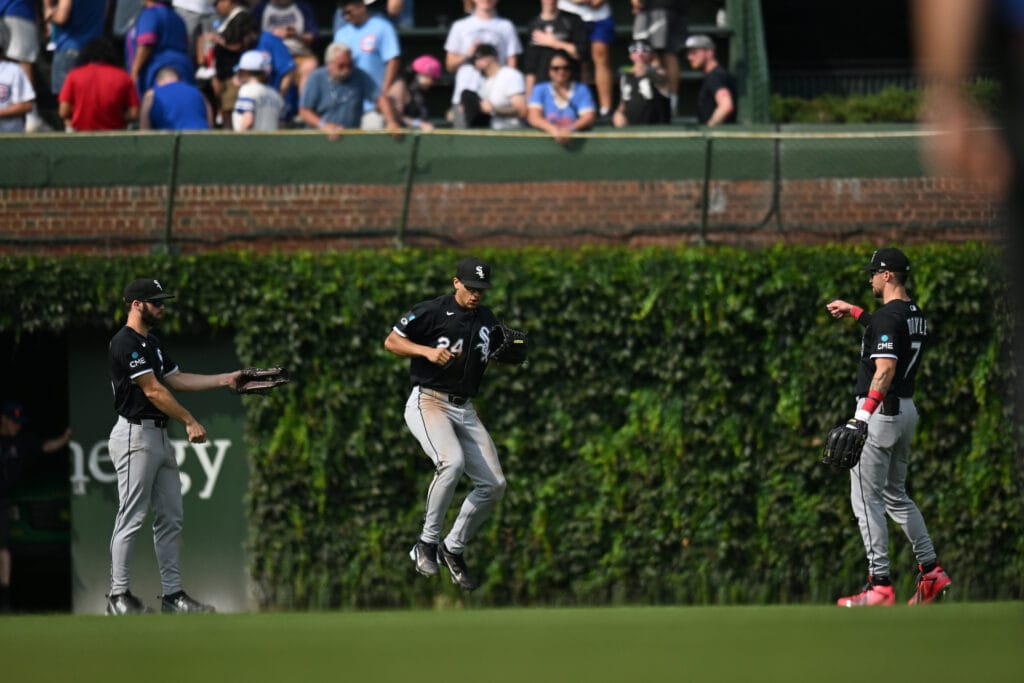
And even though losing to the Cubs on back-to-back nights on the final at-bat is painful, Venable was still pleased with the sort of playoff preview his team was getting in that environment.
“I hope they are getting a lot. We have had such good turnout at home and such a good vibe at home, the energy has been great and there have been a lot of big moments these guys have faced. This game [Monday] night was probably the biggest most intense and kind of crazy environment on the road we’ve experienced and some really high leverage spots for our guys,” Venable said.
Though driving to the north side of town might not seem like a “road series” in the traditional sense, Venable emphasized the value for the White Sox in at least being the away team in a high-intensity environment.
“These are all really important games and moments for them,” he said. “I hate we didn’t get the result but really happy they got to experience. Hopefully it serves us well. Every time you go through that, you learn a little more and you get better for the next time.”
These games were a learning experience for Venable, too. In just his second year as a manager, he is navigating high-stakes late-inning scenarios that aren’t dissimilar from what he will face in a playoff series. Whether or not to pitch to Crow-Armstrong in the tenth inning on Monday, for example.
The outcome might have made it easier for fans and media to question his decision, but Venable said the Sox’ coaching staff have held to an information-first approach to these kinds of decisions all season long. The old-school gut feeling comes into play at times too, but with Hagen Smith on the mound Monday night and Seiya Suzuki waiting on deck, the best play was to go for swing-and-miss from Crow-Armstrong.
“My approach is that we have information, and that’s important and that really grounds your decision-making,” Venable said. “But then we have collaborative discussions and talk about how we want to deviate about that. And then ultimately, I make a decision. So that’s our process in everything that we do, whether that’s resting guys or bullpen use, pinch hits, that’s part of the process.”
As the manager, Venable has to live with the times when a decision like that doesn’t work. He also has to plan through quirky situations like an almost 90-minute rain delay Tuesday night that kept him from being able to use Grant Taylor for another inning.
Stuff like that is going to happen during the regular season, but it gets amplified in the playoffs. In the long run, getting knocked down in the first two games of the Wrigley portion of the crosstown series can end up being a good thing. The White Sox have shown all season that they get back up easily, and doing it against the Cubs this week may have also shown that they will be able to respond to losing tough games in October.