

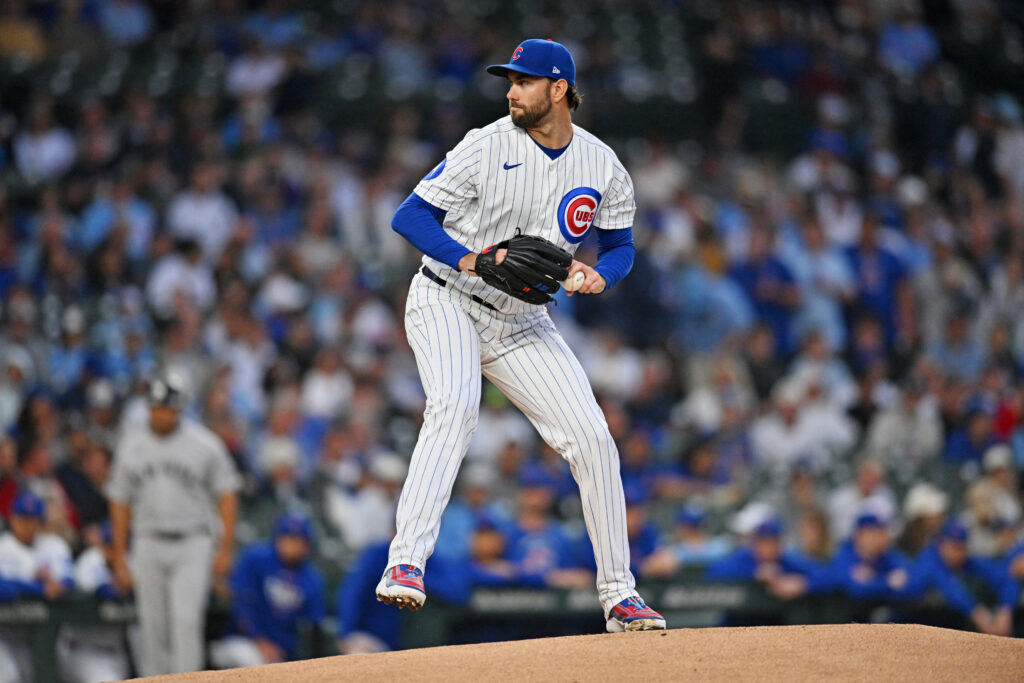
When the Cubs traded for David Peterson on June 25, manager Craig Counsell was primarily looking forward to having some certainty about who was going to take one of the spots in his injury-riddled rotation. The day before the Cubs acquired Peterson, both Edward Cabrera and Ben Brown hit the injured list.
“[He] came in at a time when we were wondering who is going to start a game for us, really,” Counsell said. “That’s where we were at […] We were really trying to bring some people in that can stabilize the rotation and that we can count on to make starts.”
In his six starts in a Cubs uniform, Peterson has done better than stabilize the rotation. Other than a rough outing against the Cardinals on July 3, he has quickly grown into a starting pitcher who can be relied upon to put the Cubs in a position to win every time he takes the mound.
Especially so in his last four starts. In each of those, including Saturday against the Yankees, Peterson has thrown at least five innings and not given up more than two runs. In his most recent start against New York, Peterson tossed 6 1/3 frames, struck out eight, and only allowed two runs, one of them unearned.
Peterson said he has not made any major changes to his pitch mix since coming to the Cubs, which fits with what they had identified when targeting him back in June. Instead, his run of good starts has come because he is focusing on mechanics that are helping him get the most out of the pitches he has.
“A lot of it was kind of coming down to getting back to some old patterns that I had when I was at my best,” Peterson said. “So starting to just kind of hammer on those a little bit, get more into my legs, use my lower body more efficiently, and take some stress off the arm, which I think allowed to help with the command and and some of the pitch shapes.”
Where Peterson has the most success is in his groundball rate, which at times in his career has been as high as 55.4%, but this season it has dropped to just over 48%. So the first step for the Cubs was to get the batted balls against Peterson to stay out of the air.
“The ball should be on the ground for David. That’s when the hitter is telling him his stuff is is right,” Counsell said. “You see it when a hitter gets into an advantage count, and then he gives up a ground ball on on like a 2-0 pitch. That’s when you know your sinker is doing the right thing. We saw hitter advantage counts and kind of weird swings, and so the hitter hitter tells you a lot in that stuff of what your stuff’s doing.”
Peterson is a good example of the kind of pitcher the Cubs have had success in identifying. Where some of Peterson’s struggles with the Mets before the trade — a 6.09 ERA and 1.65 WHIP — were the product of pitching in front of a weaker defense in New York, the Cubs pitching crew has a healthy resume when it comes to getting the most out pitchers like Peterson who have not succeeded despite good peripherals.
In Peterson’s case, simply coming over to the Cubs and benefiting from their defense makes a big difference. The Cubs have the highest-ranked defense in baseball, by a lot, so any pitcher is going to see a boost from that. Peterson has always been a high-groundball pitcher, which the Cubs knew would play well with their infield defense.
“With the defense we have, the biggest thing is it just it allows you to go out [and] gives you a bunch of confidence that the guys behind you have your back,” Peterson said. “And fill up the strike zone, you know, challenge hitters and and let those guys do what they do best behind me.”
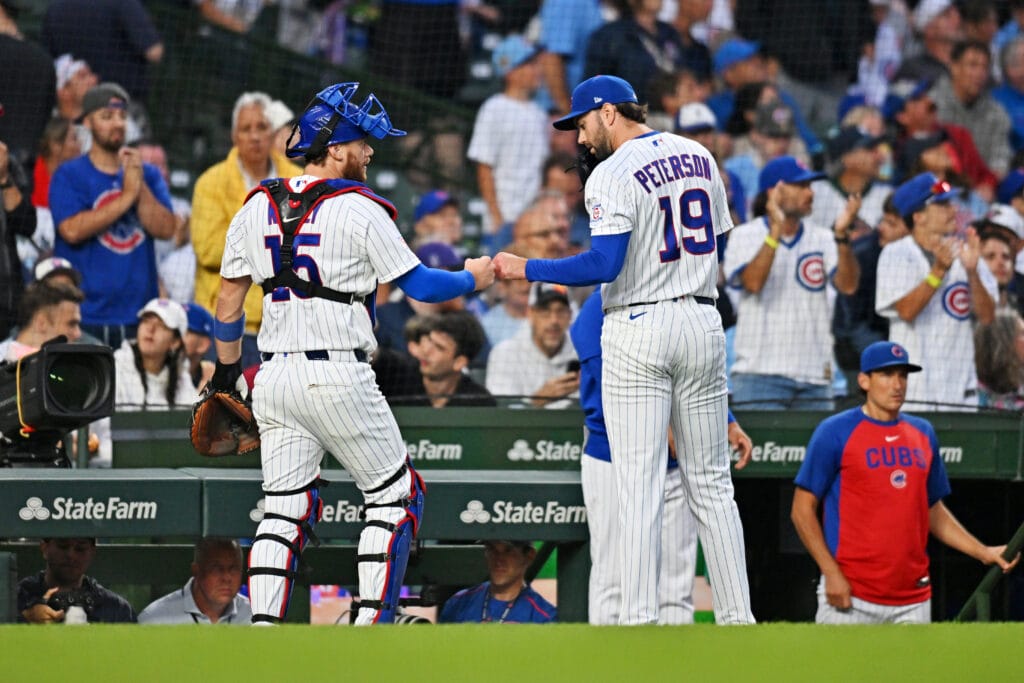
Peterson may also provide a clue as to how the Cubs might approach the Monday trade deadline. While many Cubs fans are pining for the blockbuster deal that brings someone like Tarik Skubal to the north side, it’s probably more likely that they make multiple deals for arms like Peterson who won’t force the Cubs to give up farm system and young major league talent while not getting years of control in return.
The Cubs got encouraging news regarding injured pitchers like Justin Steele and Daniel Palencia, but neither pitcher will impact the rotation. Palencia will, of course, slot into the closer’s role again, and given Steele’s lengthy absence due to his Tommy John surgery, the Cubs have said they plan to use him in the bullpen if he is able to return this season.
Because of that, the Cubs are expected to target rotation arms ahead of Monday’s trade deadline, and given the success they have had with Peterson this year and the success they’ve had with other pitchers like him, look for the Cubs to make multiple moves to bolster their starting pitching depth.
Assuming the Cubs do add further to their rotation before Monday afternoon, whoever they add will likely also benefit from the work of the Cubs’ pitching group that has benefited Peterson so greatly. In just six starts in a Cubs uniform, he’s gotten the notice of his teammates.
“It seems like the the velocity is up a little bit, so I think just whether that’s mechanics or mentality, or you know, it could be a million things,” Nico Hoerner said. “But you know, there’s a very big difference between 92 and 94 in our game, and to have two fastballs at that velocity on both sides of the plate, and then command of off-speed from a high slot, it’s a difficult at bat. There’s a reason he’s pitched at a really high level in this game before.”
Peterson said he isn’t one to do a lot of reflecting on a season while it’s in progress, but he said the last five weeks have been exciting. Having watched and admired the Cubs from afar, Peterson said he was “extremely excited to get with the guys” when they acquired him in June.
Now, with more new faces coming in the next two days, he’s focused on the rest of the season.
“It’s try and take it one day at a time and and go 1-0 every day,” Peterson said. “So I think that’s the goal, and we have a mission and a long road ahead of us. So I’m excited to see what what the rest of the season has to hold.”